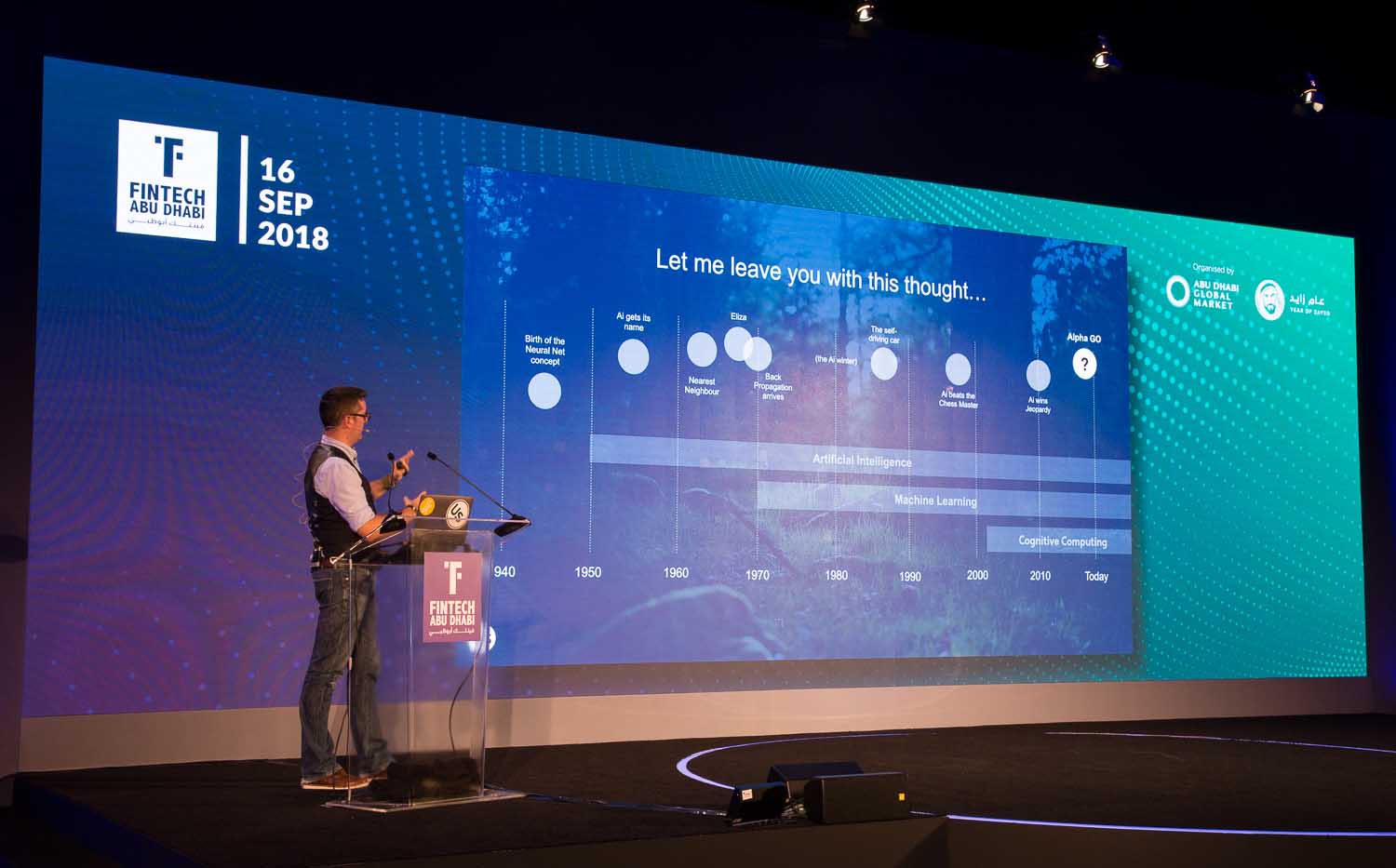

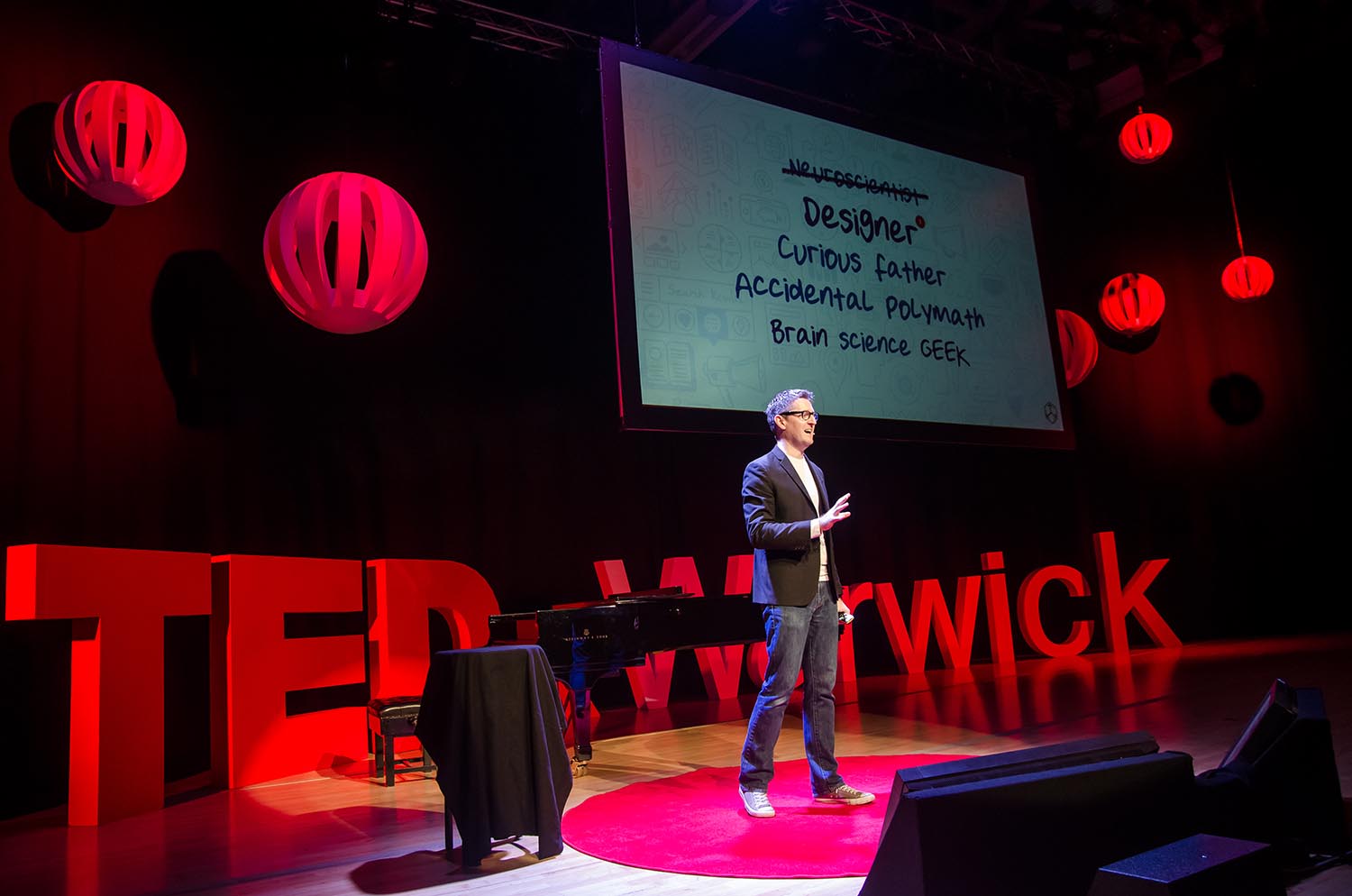




Here’s a little keynote I put together about the User Experience and Strategy of Investing.
All posts in Experience Design
16 PostsOut of the box UX
Here’s a little known fact about me: I never studied design or multimedia or service design way back when I was a student at university in the noughties. I knew what I wanted to do and be part of (even back then!) and I wanted to learn about design, information architecture (I didn’t call it that back then, I was just fascinated in information delivery and consumption), product design, digital (or multimedia as we called it back before the interweb 1.0 proper) and the users interface with ‘stuff’ because I was always a righter-brainer & rubbish at the good stuff. I was working part-time at a CBT (computer based training) company helping put together training CDRoms (remember them?) for Helicopter Pilots and I was really unimpressed with how bad they were to use (the CBT materials, not the helicopters!) and how bad the graphics were – In todays world we’d call that ‘poor experience’, and so I got myself on the ‘Packaging Design’ course at Bournemouth University. PACKAGING? ARE YOU MENTAL?! A lot of my mates (and colleagues at the CBT company!) thought I was insane doing a degree in Packaging, they thought I’d decided I wanted to design milk-cartons and not carry on doing what I was doing… but here’s the thing, I was doing what I always wanted to do… think about the component parts of all packaging;
- Form
- Function
- Instruction / Product Information
- Design / Brand
- Fast moving, evolving consumer goods
Sound familiar? Not so skeptical now are you!
It was literally the only course I could find that would teach me everything I wanted to know about design. About the esthetic form of something, the information architecture of something, the design of something that needs to stand out in a crowded aisle, the typographic quality of something (print anybody?), the brand of something, the perishability, materials, mass appeal, recognition, touch… you name it and in those 3 years I learnt the lot. I just did it using the paradigm of cardboard, tetra-pack and plastic. We even covered sales & marketing as part of the course. It was great.
It’s also something I continuously refer too today because it’s even more relevant in towards world. All our UX is just packaged design.
Packaging on a supermarket shelf has less than three seconds to grab the attention of a consumer.
Those three seconds are exceedingly important when you consider that more than 70% of purchasing decisions are made at the shelf. Add to this the fact that supermarkets can contain on average 40,000 packs to choose from, then that pack has got to work hard. It’s the same with websites, apps, digital outdoors etc.
Packaging’s role is threefold:
- To sell the product
- To protect the content
- To facilitate the use of the contents
Ditto, the role of digital is the same. The component parts are the same too;
Graphics
Packaging graphics have more to do than simply look pretty. They must work to cut through the white noise that is the crowded supermarket shelf, and attract a potential buyer.
Shape
Packaging comes in all shapes and sizes. The structure of a pack can serve to create shelf standout and sell the product, to prolong the life of the product and to facilitate the use of the product. There’s also a lot we can learn from packaging that ‘just is’. It’s practical & boring in some cases, but absolutely necessary to transport the precious cargo to the end user.
Sustainability
The packaging industry has been vilified over the years, not least on the subject of plastic bags. Yet, brands have always been looking for ways to reduce materials and maximise packaging for both environmental and financial reasons. Web optimisation in UX is the same.
Materials
Traditionally certain materials have been associated with certain markets. But as markets change and consumer attitudes adjust it is unsurprising that material choice has also changed in the packaging sector accordingly. Same in digital, only our material is now ‘content’ and ‘conversations’ and bits of media.
Regulations
The packaging industry spans many markets and so is regulated by many different forms of legislation and voluntary codes. More parallels – I work a lot in Financial Services so I know this all too well.
Golden Rules
There are 8 golden rules of packaging design that we were taught at uni too that I stilI also apply in UX:
- Conduct a thorough audit of all competitors in your market before you start, and make sure you understand their respective positionings and attributes. Then create your own.
- Look at what is happening in other markets, e.g. if you are just considering the UK or Europe, what is happening in the US or Far East that might give you a point of difference?
- Put measures in place at the start so you can track and learn as you go, e.g. measure awareness of and attitude to your packaging now and in the future. A good research agency will tell you how to do this.
- Be different and ensure your pack has its own visual equity and has a strong personality and attitude.
- Make sure your pack works at all stages of its life cycle, from leaving the factory to ending up in the user’s hands.
- Mock up how your pack would look alongside your competition. Test it in store and make sure it really does leap out at point of purchase.
- Design with tomorrow in mind. Create a pack that is in keeping with current market trends and future trends.
- Consider doing some pre-market testing to make sure your pack will find a willing audience. But be careful how you test it as consumers never quite know what they are looking for until someone shows them something new. Henry Ford once said: ‘If I’d listened to what people wanted I’d have built a faster horse!’
Out of the box UX
Everybody in the field of UX should be digesting and using content and background materials from the field of Packaging Design. It’s a rich seam of knowledge that can be directly applied to what we do. Take a website for example, it’s just in many cases a fast-moving-consumer-good and it comes with all of the same elements. Now that interfaces are merging with the real world it’s more relevant than ever.
2013 is the year where I go right back to my roots and start to bring packaging to the forefront of the area of UX that I work with. I’m going to start taking packaging examples to client meetings & as part of all my Discover, Define, Design phases. It’s actually one of the single biggest areas of parallel comparative research available to us so when you start a new brief this year, make an effort to go down to the supermarket & decide what kind of package your making for your digital content.
Resources
The UX of Visualising Data
Introduction – Visualizing the abstract
I’ve been working on a project over the last couple of months that’s opened my mind to a whole new place in UX that I’ve fallen deeply in love with. It’s always been there and I’ve always admired it, but I’ve never had to interact with it first hand and given it much studying until now. The area of Data Visualisation or InfoViz as I’ve been calling it with my clients.
I’ve got some new heroes in the form of Hans Rosling and David McCandless. Men who not only do the visual part, but have become voices that help articulate the importance of visualising data in ways that the normal user can consume. I love that quality in people.
By visualizing information, we turn it into a landscape that you can explore with your eyes, a sort of information map. And when you’re lost in information, an information map is kind of useful. We should allow the dataset to change our mindset and if we can do that, then maybe it can also change behavior. It’s a fascinating area.
David McCandless in one of his Ted Talks said the following; “We’re suffering from information overload and data glut. We need to help visualize information, so that we can see the patterns and connections that matter and then design that information so it makes more sense, or it tells a story, or allows us to focus only on the information.” Never truer words spoken about ANYTHING we do in UX, not just InfoViz.
Data is the new oil?
Lots of wonderful comparisons to natural resources when I having my adventures round data land. If data is the kind of ubiquitous resource that we can mine and can shape to provide new innovations and new insights, and it’s all around us, and it can be mined very easily if we set our UX up to gather and harvest at the right times.
Graphis diagrams: The graphic visualization of abstract data
I recently found out about this book by Walter Herdeg, which is truly a great great thing if you can actually find a copy of it. The original was published in 1974 but still has some genius to it and the v.2 book is also full of thoughtful quality. A seminal vision for the convergence of aesthetics and information value, which codified the conventions of contemporary data visualization and information design. One of the 100 most influential design books of the past 100 years, it features work by icons like legendary designer and animator Saul Bass, Brain Pickings favorite Milton Glaser, TED founder Richard Saul Wurman and many more.
For instance, check out this beauty:
Examples
During my exploration for this project I’m working on I’ve stumbled upon a whole wealth of amazing InfoViz and I wanted to share my favorites with you so you can marvel at the Data, but also at the incredible Interaction Design and Visual Design that go into making InfoViz so magical.
Four Ways to Slice Obama’s 2013 Budget Proposal
With Obama’s recent budget for next year proposed, Shan Carter et. al of The New York Times let you explore the plan in their new interactive graphic. It provides four distinct views of what the breakdowns look like, all the while keeping a distinct link between each click with smooth transitions and consistent objects. The transitions make this graphic. It’s often useful to see data from different angles, and the smooth transitions (rather than abrupt jumps) let you see how things are and how they have changed, effectively. This is fine work. Click here to check it out in all its interactive glory.
The London Riots from The Guardian
The Guardian newspaper in the UK are the bonafide gurus in visualizing news information. Here are two amazing examples from the same news topic – The London Riots – and both prove just how incredibly talented the Guardian designers and InfoViz experts are + just how fascinating some of the data from the London Riots is.
The shooting of Mark Duggan on 4 August sparked a series of riots, first in Tottenham then across England. This timeline was created to follow the spread in interactive realtime, culminating in what could be the most incredible catalog of an even ever put into digital form. Their version of it for the Arab Springs was similarly fascinating and groundbreaking!
It’s both Visual and Visceral. Articulating time as a road is very clever and breaking events across the timeline by location is equally captivating. Massive kudos indeed – Click here to go have a fiddle and marvel at this one.
However… it wasn’t the jewel in the interactive InfoViz crown for the Guardian. Oh no… they kept that back for this:
The analysis of 2.6 million tweets shows Twitter is adept at correcting misinformation – particularly if the claim is that a tiger is on the loose in Primrose Hill and that’s exactly what they did with this amazing info t0ol:
Throughout the UK riots, many scanned the internet in search of reliable information. In the absence of confirmed news, the web was often the only way of tracking events. Amidst the hubbub, countless topics came and went. As worries mounted, speculation grew. Rare individuals requested sources, countered hearsay, sought the truth. The rise and fall of rumours on Twitter is a striking display of social forces in action. Click here to have a play, it’s really quite a breathtaking thing they’ve created.
Rethinking the food nutrition label
The food nutrition label is on almost every food item, but it can be confusing in the sense that it doesn’t tell you much about whether something is good or bad for you. The UC Berkeley School of Journalism hosted a challenge for designers and food experts to rethink the label.
We are confused about what and how to eat and so we’re eating too much of the wrong things. In fact, we’re eating too much of everything. Two-thirds of American adults are overweight or obese. The obesity rate among preschoolers has doubled since 1970. Type 2 diabetes has become an epidemic. We want to make it easier to choose healthy food.
Visual designer Renee Walker won with her rework shown above. The rectangles on top of each label represent main ingredients, and bars on the bottom provide a quick thumbs or thumbs down for a breakdown of fat content, carbohydrates, etc. Icons of spoons and scoops are used to supplement serving size since no one knows what 182 grams looks or feels like. Click here to find out more.
Electricity Generated from Renewable Sources
I really enjoyed the simplicity and fluidness of this one. It’s basically a breakdown of energy consumption by country, by year. Simples. Check it out. This is the kind of thing that would normally be shown to the consumer as a table of data, or a bar chart. It’s a much more engaging experience when you can reach out and touch the data. Brilliant.
If you liked that one you might also like this one from the U.S, which is Your Electricity Bill redefined.
Political Climate Chart
Another great example of how to break 3 dimensions down into one clean interaction. Time, Issues & Political Party. The norm’ would be to add things onto a bar-chart or similar. This way we get something much more fun and something much easier to digest. Click here and have a go yourself. Some fascinating data.
Here’s another two from the U.S that give us interactive views of similar data scenarios. What a “Hundred Million Calls to 311 Reveal About New York” and the “US Health Care Spending: Who Pays?” breakdown.
Sources & great references
I’ve browsed A LOT of great resources recently and digested a lot of great InfoViz… here are some of the sources I’d recommend if you’re starting to fall in love with Data like I have:
UX Prestige
Every great magic trick consists of three parts or acts. The first part is called “The Pledge”. The magician shows you something ordinary: a deck of cards, a bird or a man. He shows you this object. Perhaps he asks you to inspect it to see if it is indeed real, unaltered, normal. But of course… it probably isn’t. The second act is called “The Turn”. The magician takes the ordinary something and makes it do something extraordinary. Now you’re looking for the secret… but you won’t find it, because of course you’re not really looking. You don’t really want to know. You want to be fooled. But you wouldn’t clap yet. Because making something disappear isn’t enough; you have to bring it back. That’s why every magic trick has a third act, the hardest part, the part we call “The Prestige”.
I’ve started to think about this a lot recently – Process – that fallen tree on the path to the Emerald City. I think we’ve over-compicated it. Let’s pull delivery down to an essence, call it Lean or whatever you want, it’s just 3 simple phases to fix a problem:
| Discover | Define | Design | |
|---|---|---|---|
| Magic | The Pledge | The Turn | The Prestige |
| Advertising | The Insight | The Concept | The Solution |
| Client | Business Objectives | Customer / User Need | Technical Requirements |
| Agency | Quantitative Qualitative Desk Research Ethnographic Observation |
Mental Model Experience Design / Map Strategic Response Skeleton / Structure |
Sketch / Wireframe / Patterns Tech / Prototype / POC Final Screen Designs Content / Taxonomy |
Remember that UX is just the focus… a thread that runs through all of our disciplines, and which no single discipline owns (Nick Fink).
Now… before you all go batty and start bashing me. Know this. I ‘get’ that the above table isn’t exhaustive and there’s a ton of other big and little things that we could be doing, but if we strip all the noise & delivery back to simplicity then why not just offer 3 phases and 9-12 deliverables (we’d never do all the Discover stuff, right?!). I’m sure it’d be easier for clients to digest.
Experience CVs – An approach
You know the score. You’ve been working in IA / UX for a while. You’ve got a pretty hefty CV and it’s boring. I’ve been having a play trying to find different ways of showing my experience. A lot of projects I’m working on at the moment involve Dashboard Design and information design. So I looked there for some inspiration. It’s just a rough, so don’t judge it on appearance, but see what you think about the approach:
My UX Book List – Essential Reading
I’m not a massive reader of books to do with work, if I’m honest. I prefer to sit down and read a tome that takes my mind off of work and I’m one of those UX’y people who generally prefers to learn by my past mistakes and other peoples actual work. Plus if it ain’t on Kindle then chances are I won’t read it these days. That said, I do have a set of books on my shelf that I’ve bought, been given, borrowed and forgot to return that cover lots of different angles of UX, Design, Marketing, Social and all those other bits I tinker with.
Obviously this list is mine and might not float your boat because of our different experience with scientific research methods, psychology, interaction design, user interface design, product or visual design and our levels of communication skill, but if you’re a voyeur you might like to have a look at my bookshelf.
So here is a list of books I would pick as the must read UX books.
Generalist books that I urge you to check out
- The Tipping Point by Malcolm Gladwell
- Viral Loop: The Power of Pass-it-on by Adam Penenberg
- Purple Cow: Transform Your Business by Being Remarkable by Seth Godin
- Permission Marketing: Turning Strangers into Friends and Friends into Customers by Seth Godin
- Tribes by Seth Godin
- Content Strategy for the Web by Kristina Halvorson
- The Gamification of Learning and Instruction: Game-Based Methods and Strategies for Training and Education by Karl M Kapp
- Gamestorming: A Playbook for Innovators, Rulebreakers, and Changemakers by David Gray
- Communicating Design: Developing Web Site Documentation for Design and Planning by Dan Brown
- Reality is Broken: Why Games Make Us Better and How They Can Change the World by Jane McGonigal
- Understanding Comics: The Invisible Art by Scott McCloud
- Bank 2.0: How customer behaviour and technology will change the future of financial services by Brett King
- Made to Stick: Why Some Ideas Take Hold and Others Come Unstuck by Chip Heath and Dan Heath
- The Decisive Moment: How The Brain Makes Up Its Mind by Jonah Lehrer
- Steve Jobs: The Exclusive Biography by Walter Isaacson (this is my curve ball in the list & also the one I learnt the most from)
The UX Book List
- UX Storytellers by
- The Elements of User Experience: User-Centered Design for the Web by Jesse James Garrett
- Undercover User Experience Design by Cennydd Bowle, James Box
- Designing the Obvious: A Common Sense Approach to Web Application Design by Robert Hoekman Jr.
- A Practical Guide to Information Architecture by Donna Spencer
- 100 Things Every Designer Needs to Know About People: What Makes Them Tick? by Susan Weinschenk
- Simple and Usable Web, Mobile, and Interaction Design by Giles Colborne
- Measuring User Experience by Thomas Tullis, William Albert
- Thoughts on Interaction Design by Jon Kolko
- Handbook of Usability Testing: How to Plan, Design, and Conduct Effective Tests by Jeffrey Rubin, Dana Chisnell
- Card Sorting: Design Usable Categories by Donna Spencer
- Designing with the Mind in Mind: Simple Guide to Understanding User Interface Design Rules by Jeff Johnson
- Mental Models: Aligning Design Strategy with Human Behavior by Indy Young
- Search Patterns: Design for Discovery by Peter Morville, Jeffery Callender
- The Essential Persona Lifecycle: Your Guide to Building and Using Personas by John Pruitt , Tamara Adlin
- Information Architecture for the World Wide Web by Louis Rosenfel, Peter Morville
- Designing Social Interfaces by Christian Crumlish
- Remote Research by Nate Bolt, Tony Tulathimutte
- Storytelling for User Experience by Whitney Quesenbery, Kevin Brooks
The Infographic Book List
- Information is Beautiful by David McCandless (see also my article on InfoGraphics)
Its by no means exhaustive and I’ll endeavor to add some more to it. But it’s the stuff on my shelf and I use them as references in much of what I do. Enjoy.
10 really neat experience principals
Found these little beauties nestled in a Seminar Summary from 2002 no less… Probably baffled the hell out people 10 years ago (say that out loud – I said 10 years ago, they’re a decade old – Scary!) but I would say they actually hold a lot of truth and value in todays digital era:
They’re from the book The Ten Demandments for turning the most demanding consumers into the most delighted customers. Rules to Live By in the Age of the Demanding Customer by Kelly Mooney.
- Let me do things
- As I move through the experience, let me do things that change the resulting display in a way that feels as though it has been designed for me personally, in my context. Move beyond mere viewing.
- Let me win
- Reward me every time I accomplish something. Make the experience transparent so that the structure, operation and purpose of the experience is comprehensible and valued.
- Push me
- Help me reveal my potential; don’t let me “get by.” Help me visualize what I want to accomplish, so I can plan what I want to do next.
- Help me learn
- Combine doing with understanding. Let us learn from each other…and from the web of connection.
- Sense and respond
- Let me customize while you dynamically personalize for me. Make me feel like the artifact is alive and aware of my needs. Think of responsiveness by time, format, form and structure and quality of response.
- Orienteer
- Give me a journey that I can take and tasks that I can do. Don’t steer, just give me a map to keep me located. Show me what and who’s interested so I can direct my participation effectively.
- Outfit me
- Deliver new capabilities and make it easy for this to become a part of my life while skilling me.
- Connect me
- Help me make connections with the subject matter, or across destinations, or with other people.
- Immerse me
- Plunge me into the experience in a way that makes me even less (or even un-) aware of the place or setting that I’ve come from.
- Make waves
- Engage me in co-discovery and co-creation and transform my life, my work, my business.
Original source: http://www.humancentereddesign.org/webconference/jf_se_outline.php
The lines of experience
It’s been an exciting couple of years hasn’t it? The whole offline / online thing… the internet went from being a place you visited to ‘digital’ which exists in multiple places simultaneously and intrinsically woven into our lives. The Eco-System effect. How about this one, you’ll like this and be repelled at the implications in equal measures. There are some bars and clubs in the U.S using a novel technology to help partygoers decide where to party. SceneTap, an American start-up, uses cameras to scan the faces of those who enter and leave participating establishments. Its software then guesses each person’s age and sex. Aggregated data is streamed to a website and mobile app. This allows punters to see which bars are busy, the average age of revellers and the all-important male-to-female ratio. The bar owners gain publicity and intelligence about their customers. For instance, did a promotion aimed at women attract many?
It’s the phone angle. You can adapt your behavior in advance when things used to be essentially ‘pot-luck’. We’re almost cyborg in nature by virtue of having our lives augmented with mobile. We can see through walls now. Bye-bye FourSquare, I’m not going to ‘check-in’ because it already knows I’m there and tells people if I opt in to be auto-detected.
Many companies face the challenge of creating entirely new behaviours for new products. However, my thinking is that behaviour change is far more successful when it aligns with a habit we’ve already formed, which apparently shapes nearly half of the decisions we make every day.
Around 74.2% of the UK’s population, totalling 47m, will go online at least once a month this year on a range of devices including smartphones and tablets, according to eMarketer stats… and that number has almost quadrupled in 5 years because of the rise of the smartphone. We’re all getting smarter at astonishing rates.
I’m also loving the Nike Fuel Band and it’s bigger applications… At SXSW this year, to promote the Fuel Band, Nike essentially turned the inside of a venue into one huge Fuelband wristband with the same colored lights and ability to track energy level. Except in this case, Nike was tracking the energy level of the whole crowd.
Across town from the gig they had rigged up lighting in a building to react to the audience at the gig. The more energetic the crowd, the greener the building became, so that people outside the event could witness the level to which the crowd was going off. It helped that Nike picked two very high energy bands for this show: Diplo and Sleigh Bells. Nike measured the crowd’s energy level by placing Nike FuelBands on the wrists of a large number of attendees, then tracked the activity using customized wireless technology that functions similarly to the way the iOS app works. It’s an extreme example but think about it… using digital, people influenced the lighting at another location. I remember when I got my first feature phone in 1997 people said I was mad because the SMS thing would never take off!
What happens when all these new ways of doing things start converging and the lines start to blur? For instance… Online sales are expected to reach to a staggering $317 billion by 2016 in the U.S which is phenomenal, right… but I’ve always had this hypothesis that online sales aren’t just about convenience, they’re also about data. People love the fact that they can see something rated or reviewed, or find obscure things that are just too difficult to find on the high-street. It’s a demand thing. I’d be fascinated to see what starts to happen when those ratings and ‘easy to find’ influences start popping up in more Urban environments – “Hey Pete, there’s a huge footfall of people like you occurring at this place not too far from where you are right now & they’re all buying things you might like, let me lead you there“. Augmented behavior offline using online data. Could be huge.
Users understand the importance of the internet and a bad experience can go a long way; 44% of online shoppers will tell their friends about a bad experience online according to a report by KissMetrics. So take that sentiment offline and there is this whole “don’t go in there Pete, a lot of people like you had a rubbish time”…
Then there’s the growing behavior around tablets. Sure, it was bound to happen, we just needed Apple to lead the charge, but it’s the way they’ve altered and augmented behavior that I find astonishing. 69% of tablet owners make a purchase on their device every month, according to stats from inMobi and Mobext. 50% of tablet owners spend at least an hour a day accessing media content on their tablets, and 72% use it while watching TV. So it’s not a huge leap ahead of us to assume ‘shopping the adverts’ is just around the corner. The advertising they said was dead is just about to be supplemented by technology. My behavior doesn’t change, but the experience is augmented by the ability to just a button on my iPad & buy what I’m watching. Makes sense. Especially if there are “100 people like you all doing the same”.
According to an IAB/ValueClick study, 52% of consumers are happy to see online advertising because it allows them to view content or use services online at no cost – they’ve brought their offline viewing habits with them. But 55% said they would rather see advertising relevant to their interests and 59% would prefer a lower number of relevant ads than a higher volume of irrelevant ones. So how long before that mobile or tablet you use influences what adverts you see while you’re watching your favorite shows, so when you reach out and buy it instantly you’re actually just choosing to buy from things you’re really only interested in. I don’t have a dog, don’t show me adverts for dog food… Augmented advertising comes to the TV experience. It’s all totally feasible now.
Digital experience crossing over in the real world is becoming more and more a reality and the next few frontier years are going to be really exciting. The possibilities are endless and impact on our lives can only be positive.
What is experience?
Experience is … a kind of huge spider-web of the finest silken threads suspended in the chamber of consciousness, and catching every air-borne particle in its tissue — Henry James
The apprehension of an object, thought, or emotion through the senses or mind: a child’s first experience of snow.
Active participation in events or activities, leading to the accumulation of knowledge or skill: a lesson taught by experience; a carpenter with experience in roof repair.
The knowledge or skill so derived.
An event or a series of events participated in or lived through. The totality of such events in the past of an individual or group.
To participate in personally; undergo: experience a great adventure; experienced loneliness.
To most men, experience is like the stern light of a ship, which illumines only the track it has passed — Samuel Taylor Coleridge
a particular incident, feeling, etc., that a person has undergone an experience to remember
accumulated knowledge, esp of practical matters a man of experience
Experience is like medicine; some persons require larger doses of it than others, and do not like to take it pure, but a little disguised and better adapted to taste — Lord Acton
the totality of characteristics, both past and present, that make up the particular quality of a person, place, or people
the impact made on an individual by the culture of a people, nation, etc. the American experience
Experience seems to be like the shining of a bright lantern. It suddenly makes clear in the mind what was already there, perhaps, but dim — Walter De La Mare
the content of a perception regarded as independent of whether the apparent object actually exists Compare sense datum
the faculty by which a person acquires knowledge of contingent facts about the world, as contrasted with reason
the totality of a person’s perceptions, feelings, and memories
to participate in or undergo
to be emotionally or aesthetically moved by; feel to experience beauty
A new element in her experience; like a chapter in a book — Henry Van Dyke